Home Loan Tax Benefits in India: Interest and Principal Deductions
How much tax you can save on a home loan in India, what changed with the Income-tax Act, 2025, how the old and new tax regimes differ, and a worked example.
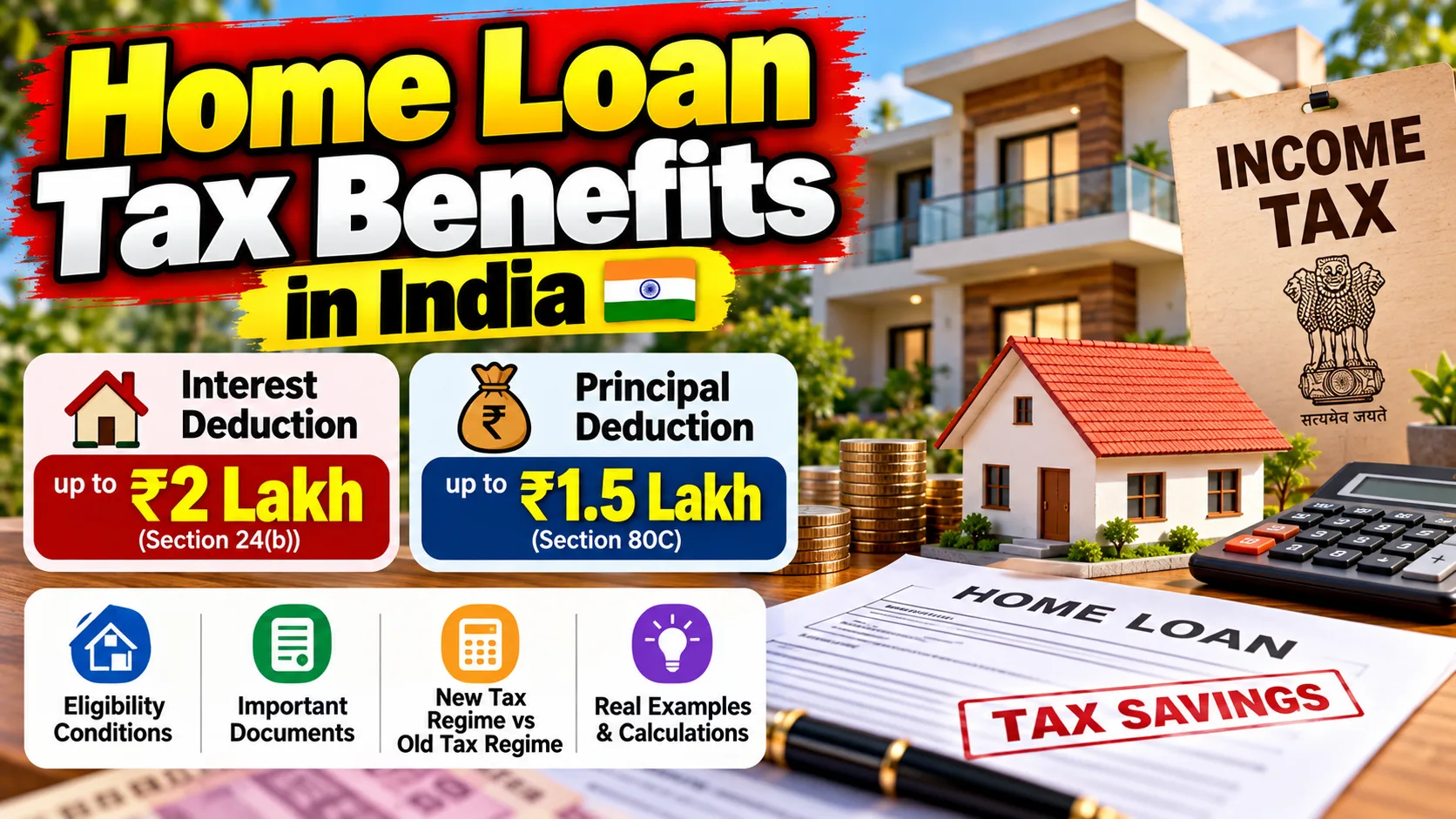
A home loan does more than give you a house. It can also reduce your income tax, but only if you use the right regime and meet the conditions. Many people lose the benefit because they do not keep the lender's certificate, claim in the wrong year or are on a tax regime that does not allow the deduction.
This guide explains the deductions in plain language, what changed because the Income-tax Act, 2025 replaced the 1961 Act from 1 April 2026, and how to work out what you can actually claim.
In short: Under the old tax regime, you can deduct up to ₹2 lakh of home loan interest a year on a self-occupied house, and the principal you repay can count towards the ₹1.5 lakh limit that applies to specified savings and payments. Under the new tax regime, the self-occupied interest deduction is not available.
A note on section numbers
The 1961 Act became widely known through section numbers: Section 24(b) for home loan interest and Section 80C for principal repayment. The Income-tax Act, 2025 applies from tax year 2026-27 (starting 1 April 2026) and re-numbers its provisions. The ideas continue, but the numbers differ.
So in this guide we describe each benefit by what it does. When you file your return or give your employer a declaration, use the section names that appear on the Income Tax Department's current forms and guides at incometax.gov.in.
1. Interest on a home loan
You can deduct the interest you pay on a loan taken to buy, build, repair or rebuild a house.
Self-occupied house. Under the old regime, the deduction is up to ₹2 lakh a year. The conditions include:
- The loan must have been taken for buying or building the house, and construction must be completed within five years from the end of the tax year in which the loan was taken. If not, the cap falls to ₹30,000.
- You need the lender's interest certificate showing the interest paid in the year.
Let-out (rented) house. Interest on a loan for a property you rent out can be deducted against the rental income. If the interest is higher than the rent, there are limits on how much of the resulting loss you can set off against other income in a year, and the rest can be carried forward. These rules are more complicated, so take advice if you are in this situation.
Under-construction house. The interest you pay before the house is complete cannot be claimed in those years. It can be claimed after completion, in five equal instalments starting with the year of completion. Keep records of the interest paid during construction.
2. Repayment of principal
Under the old regime, the principal portion of your EMIs counts towards the ₹1.5 lakh a year limit that is shared with other eligible savings and payments, such as provident fund contributions and life insurance premiums. Stamp duty and registration charges paid on buying the house can also count in the year you pay them, within the same limit.
Points to remember:
- If you sell the house within five years of getting possession, the deduction you claimed for principal repayment can be reversed and added to your income in the year of sale.
- If you already use your ₹1.5 lakh limit through other investments, the principal repayment adds no extra benefit.
3. Old regime vs new regime
| Old tax regime | New tax regime | |
|---|---|---|
| Interest on self-occupied house | Up to ₹2 lakh a year | Not available |
| Interest on let-out house | Allowed against rent, subject to loss limits | Allowed against rent, with tighter limits on setting off a loss |
| Principal repayment | Within the ₹1.5 lakh limit | Not available |
| Slab rates | Higher | Lower, with more slabs |
Which regime is better depends on your whole income and deductions, not just the loan. If your total deductions (home loan interest, provident fund, insurance, children's fees, health insurance, rent allowance and so on) are large, the old regime may give a lower tax. If they are small, the new regime's lower slab rates may win. Calculate your tax under both before you choose, and remember that salaried people can usually change their choice each year while self-employed taxpayers have stricter conditions.
4. A worked example
Say you took a ₹50 lakh loan at 8.5% for 20 years on a house you live in. In the first year, you pay about ₹4.21 lakh in interest and repay about ₹99,500 of principal. (Our EMI guide shows how these numbers arise.)
Under the old regime, and assuming you are in the 30% slab plus 4% cess (an effective rate of 31.2%):
| Deduction | Amount allowed | Approximate tax saved |
|---|---|---|
| Interest (capped) | ₹2,00,000 | ₹62,400 |
| Principal (if you have no other investment under the shared limit) | ₹99,500 | ₹31,000 |
So in this example your tax saving could be around ₹93,000 in the first year. If you have other investments that already use the ₹1.5 lakh limit, the principal benefit shrinks or disappears.
Notice that the interest paid (₹4.21 lakh) is more than twice the cap of ₹2 lakh. A large loan on a self-occupied house therefore often gives only a partial tax benefit, so do not assume the tax saving will offset the interest cost.
5. Joint loans
If you take the loan jointly with a spouse or another co-owner, each person can claim the deduction for their own share of the interest and principal, as long as they are both co-owners and co-borrowers and pay the EMIs. Each has a separate ₹2 lakh cap for self-occupied property. The split should match the ownership shares and the actual payments, and each co-borrower should hold the lender's certificate.
6. Benefits that have ended
Earlier governments offered extra deductions for first-time buyers on loans sanctioned in certain periods. These extra deductions applied only to loans sanctioned up to 31 March 2022, so they are not available for new loans. If you see them advertised, check that they still apply.
7. What to keep for your tax return
- The lender's interest and principal certificate for the year.
- The sale deed, allotment letter and possession letter to show ownership and the date of possession or completion.
- Payment proofs for stamp duty and registration.
- If you claim as a joint owner, the loan sanction letter showing your name as a co-borrower.
- Your employer's declaration if you want tax deducted at source adjusted during the year.
Frequently asked questions
Can I claim a deduction before I get possession?
Not for the interest paid before completion in that year. It is claimed in five equal instalments after the house is completed. Keep records of the pre-completion interest.
What if I own two houses?
Rules for a second self-occupied house are different, and the total effect can depend on how the second house is treated. Take advice on how your situation is treated under the current Act.
I stay in a rented house in another city. Can I still claim?
If the house is for your own use but you cannot occupy it because of work in another place, it can still be treated as self-occupied. If it is rented to someone, the rental rules apply. Facts matter, so confirm with a tax professional.
Will I lose the benefit if I switch to the new regime?
For a self-occupied house, yes, the interest and principal deductions are not available under the new regime. Compare your total tax under both regimes before choosing.
This guide is general information, not tax advice. Tax rules, limits and section numbers change, and your situation may differ. Check the Income Tax Department's current guidance or speak to a qualified tax professional before you file.