Documents to Check Before Buying a Property in India
A practical checklist of the papers to verify before you pay token money on a flat, house or plot in India, and what each document actually proves.
Most property disputes in India do not start with a fraud that nobody could have spotted. They start with a buyer who paid an advance first and read the papers later. Once money has changed hands, walking away gets harder, and sometimes it costs you the advance.
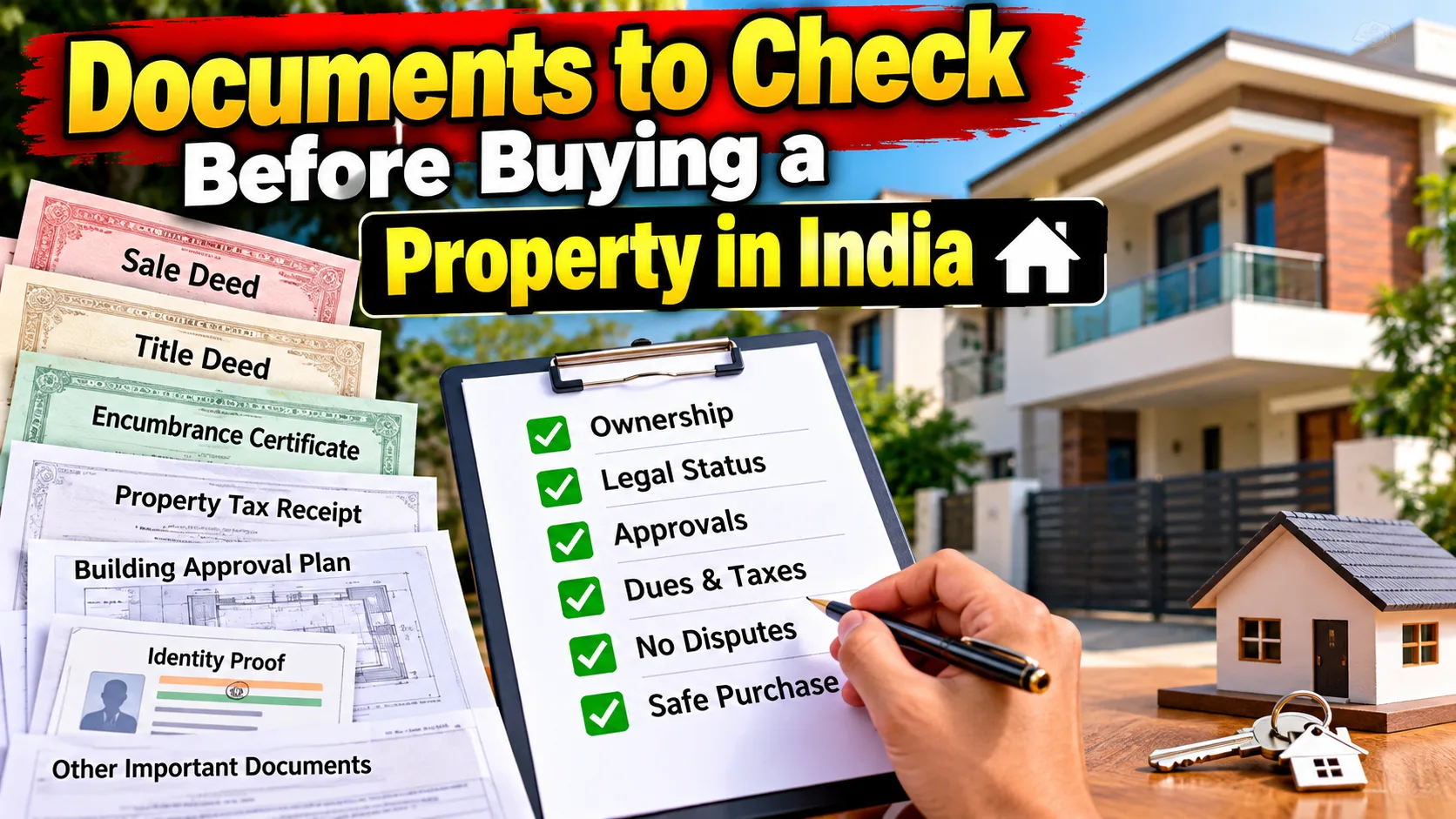
This guide lists the documents to ask for before you pay a token amount, what each one proves, and the warning signs to watch for. It applies to flats, independent houses and plots. Where something differs for under-construction projects or for land, it is marked.
In short: Confirm three things before paying anything. The seller really owns the property (title), nobody else has a claim on it (encumbrances and disputes), and it is legally allowed to be sold and lived in (approvals).
1. Proof of ownership (title)
Sale deed or title deed. This is the registered document that transferred the property to the current owner. The seller's name on it must match their identity documents exactly. Ask for the original to see, and keep a certified copy for your lawyer.
Chain of earlier deeds. A single deed shows only the last transfer. A lawyer will ask for the earlier deeds, usually going back about 30 years, to confirm that each owner in the chain had the right to sell. A missing link, or a gap where the property passed without a registered document, is a serious warning sign.
Mutation record. Registration changes ownership in law, but the local revenue or municipal record also has to be updated in the new owner's name. This is called mutation (in Bihar it is dakhil-kharij). If the seller bought the property but never got it mutated, fix that first.
Inherited property. If the seller inherited the property, ask for the death certificate of the previous owner and a legal-heir certificate or a registered will. Every legal heir has to agree to the sale. One missing heir can challenge the sale years later.
Property sold through a power of attorney. Be very careful here. In Suraj Lamp & Industries v. State of Haryana (2011), the Supreme Court said that sales made only through a general power of attorney, an agreement to sell or a will do not transfer ownership. A valid transfer needs a registered sale deed.
2. Is the property free of loans and disputes?
Encumbrance certificate (EC). Issued by the sub-registrar's office, it lists registered transactions on the property for a period you specify, including mortgages. Ask for one covering at least the last 13 to 30 years. A "nil" certificate means no registered encumbrance in that period. Remember that it shows only registered transactions, so it does not replace a court-record search.
Loan and mortgage status. If the seller has a home loan on the property, the lender holds the original documents. You will need the bank's written statement of the outstanding amount and its plan to release the documents once the loan is closed. Make sure the loan is closed at the time of sale, with the money going directly to the lender.
Litigation check. Ask the seller to confirm in writing that no case is pending. Then check it yourself. Your lawyer can search the district court and High Court records under the seller's name and the property details, and read any public notice published for the property.
3. Approvals and legal status
Sanctioned building plan. The local development authority or municipality approves the plan. Compare it with what has actually been built. Extra floors, closed balconies and illegal additions can cause trouble with future loans and sales.
Completion or occupancy certificate. For a finished building, the completion or occupancy certificate (CC or OC) confirms the building was built as per the sanctioned plan and is fit to live in. Without it you may face difficulty getting a home loan, water and electricity connections, and later resale. In many cities this document also decides whether GST applies when you buy a flat.
Land-use status. Confirm that the land is permitted for residential use in the city's master plan. Agricultural land needs a formal conversion before a house can be built on it.
RERA registration (for projects). If you are buying in a project that is under construction, or a new project, check that it is registered with your state's RERA authority and that the registration is valid. Our RERA guide explains how to check this in a few minutes.
4. Extra papers for flats
- Builder-buyer agreement or agreement for sale. Read the carpet area, price, payment schedule, possession date and the penalty clauses before signing.
- Allotment letter and payment receipts for every instalment already paid.
- Society NOC and share certificate for resale flats in a cooperative society.
- Maintenance and utility bills for the last few months, to confirm there are no pending dues.
- Parking allotment in writing, if parking is part of the deal.
5. Extra papers for plots and land
- Survey or plot details that match the land on the ground. Walk the boundaries and compare them with the map.
- Land revenue records. In Bihar these are the khatiyan and jamabandi, which you can search on the state land-records portal. Our guide to checking Bihar land records online walks through it.
- Latest land revenue or rent receipt, which shows that the person selling is the one the government record recognises.
- Boundary and access. Check that the plot has a legal road access, not just a path through someone else's land.
6. Check the people, not just the paper
- Compare the seller's name, spelling and signature across the deed, PAN, Aadhaar and tax receipts. Small mismatches should be corrected before the sale, not after.
- If the seller is a company or builder, check that the person signing has authority to do so.
- If the property is jointly owned, every co-owner must sign or give a valid written authority.
7. Paying and recording the deal safely
- Pay only by bank transfer or cheque, never in cash, so there is a record of each payment.
- Put the token amount, refund conditions and timeline in a written agreement. Many token receipts say nothing about what happens if the deal falls through.
- Understand the TDS rule. For most property purchases above ₹50 lakh, the buyer has to deduct 1% tax at source and deposit it with the government. Check the current procedure on the Income Tax Department's website, since forms and section numbers changed when the new Income-tax Act came into effect.
- Have a property lawyer read everything. The fee is small compared with the price of the property.
- Visit at different times of the day and speak to neighbours about water, noise and any disputes.
Red flags that should slow you down
- The seller pushes you to pay quickly "because another buyer is waiting".
- Original documents are "with the bank" or "with a relative" and cannot be shown.
- The price is well below the area's market rate.
- Documents are photocopies only, or names do not match.
- The seller refuses to let your lawyer see the papers.
A seller with a clean property rarely minds these checks. Hesitation is information.
Frequently asked questions
How many years of documents should I check?
Lawyers commonly check the chain of title for around 30 years. A shorter chain is acceptable only if the property was first allotted or sold by a government body or a registered developer and the original allotment papers are clear.
Is an encumbrance certificate enough to prove clear title?
No. It shows registered transactions and mortgages for the period you request. It does not show unregistered claims, court cases or whether the seller's title was valid in the first place. Use it together with the title chain and a litigation search.
Can I buy a property that has a bank loan on it?
Yes, but only with a clear plan for closing the loan. The safest way is for the seller's lender to give a written outstanding amount, and for your payment to go straight to that lender so the original documents can be released to you.
What if the seller has lost the original sale deed?
Ask for a certified copy from the sub-registrar's office, a police complaint or newspaper notice about the loss, and an indemnity from the seller. Have your lawyer decide whether the risk is acceptable.
This guide is general information, not legal advice. Rules and document names vary by state, so confirm the details with a property lawyer and the local registration office before you pay.