How to Check Land Records in Bihar Online: Jamabandi, Khata and Khesra
Step-by-step guide to checking Bihar land records online, including how to find your jamabandi, what khata, khesra, mauza and anchal mean, and how to verify a seller's papers.
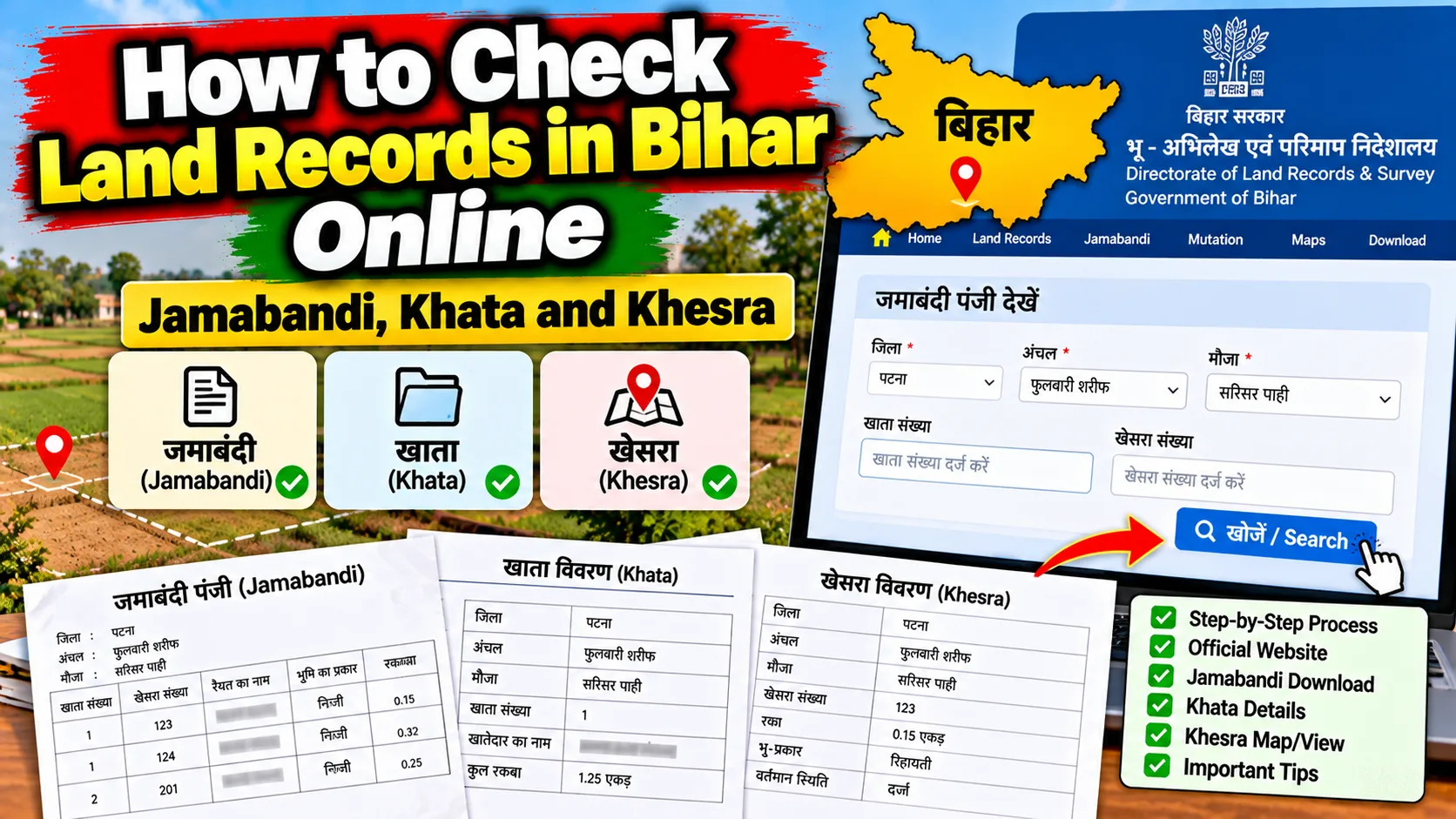
Anyone who has bought, inherited or sold land in Bihar has met the same words on every document: khata, khesra, mauza, anchal, jamabandi. If you do not know what they mean, it is hard to tell whether the land a seller shows you is really theirs.
The state's Revenue and Land Reforms Department has put these records online. This guide explains the terms, shows how to look up a record step by step, and tells you how to use the result to check a seller's documents before you buy.
In short: Pick the district, anchal (circle) and mauza (village), then search by khata number, khesra (plot) number or owner name on the state land-records portal. Use the online record to cross-check a seller's papers, but remember that a printout is for reference and is not a substitute for certified copies.
The terms you need to know
| Term | What it means |
|---|---|
| Jila (district) | The district. Bihar has 38 of them. |
| Anchal (circle) | The revenue circle under the district, where the land revenue office sits. |
| Mauza | The revenue village. Land records are organised village by village. |
| Raiyat | The person recorded as the holder of the land. |
| Khata | The account number that groups the land held by a particular owner or set of owners in a mauza. |
| Khesra | The plot number of an individual piece of land in the mauza. |
| Rakba | The area of the plot. |
| Khatiyan | The record of rights prepared in a land survey, which lists the holders and their plots. |
| Jamabandi | The land revenue register kept at the anchal office. It shows who currently holds the land and pays land revenue (rent) for it. |
| Dakhil-kharij (mutation) | The process of changing the name of the holder in the revenue record after a sale, gift or inheritance. |
| Lagan | The land revenue or rent paid to the government. |
One thing to note is that a registered sale deed shows a transfer. The jamabandi shows whose name the government record carries. For a safe purchase, both should agree.
The official portals
Bihar's land records are available through the state's land records portals, Bhu Abhilekh (bhuabhilekh.bihar.gov.in) and Bihar Bhumi (biharbhumi.bihar.gov.in). Both are run by the Revenue and Land Reforms Department. The names and menu layout of government portals change from time to time, so if a link or option below looks different, use the department's own website to find the current address.
How to search a land record online
The exact buttons may differ, but the steps are similar on the portal:
- Open the official land records portal in your browser. Make sure the address ends with
bihar.gov.in, because look-alike websites exist. - Go to the section for viewing your account or record of rights. On the Bhu Abhilekh homepage, it is the option in Hindi that means "view your account" (apna khata dekhein). On Bihar Bhumi, look for the jamabandi or record of rights option.
- Select the district (jila).
- Select the anchal (circle). Some versions of the portal ask for the subdivision first.
- Select the mauza (village) where the land is located.
- Choose how to search. The common options are by khata number, by khesra (plot) number or by the name of the owner. Search by plot number when you are checking a specific piece of land.
- Enter the details and click search.
- Open the result. You can usually view it on the screen and print it or save it as a PDF for your reference.
If you do not find a record, check the spelling of the village and the owner's name, because a different spelling in Hindi or English can hide the entry. Try the khata or plot number as well.
What to read in the record
When the record opens, look at:
- Name of the raiyat (holder) and the father's or husband's name. Do they match the seller exactly?
- Khata and khesra numbers. Do they match the number on the sale deed and the seller's papers?
- Area (rakba). Compare it with the area in the deed. Differences may mean the land was partly sold or measured differently.
- Type of land. Agricultural land and residential land are treated differently, and agricultural land needs a formal change of use before you build a house on it.
- Joint holders. If more than one person is shown as holder, all of them (or their legal heirs) must sign the sale.
How to use it to check a seller's papers
Before paying a token amount for a plot or house on revenue land, run this check:
- Ask for the seller's sale deed, previous deeds and the latest rent (lagan) receipt.
- Search the online record using the khata and khesra numbers printed on the deed.
- Check that the name in the jamabandi is the seller's name. If the name is that of someone earlier in the chain, the seller's dakhil-kharij may never have been done.
- Confirm that the area and boundaries match.
- Visit the anchal office to see the certified copy, and ask whether any dispute or objection is pending against the plot.
- Get an encumbrance certificate from the registration office and a lawyer's opinion on the chain of title.
For the full list of papers to ask for, read our guide to documents to check before buying a property.
What to do if the record is wrong
Online records are copies of government registers, and mistakes happen, such as a misspelt name, the wrong area or a missing entry after a sale. The usual remedy is to apply at the anchal office for correction, and to file a mutation application if the name has not been updated after a purchase. Keep the registered deed, previous receipts and identity documents ready. The office may issue a notice, hold a hearing and then update the record.
Avoid paying anyone who promises to "fix the record quickly" without an official order, because some people exploit the process.
Limits of an online record
- A printout from the portal is for reference. For official use, such as a bank loan or a court case, you usually need a certified copy from the anchal office or the relevant authority.
- The online record is only as accurate as the registers it was created from. It may lag behind recent sales or mutations.
- It does not show disputes, mortgages or registered transactions. Use an encumbrance certificate for the latter, and a lawyer's search for court cases.
- It does not tell you whether the land is legally permitted for the use you have in mind. Check the land-use status with the local authority.
Frequently asked questions
Is the khatiyan the same as the jamabandi?
No. The khatiyan is the record of rights from the land survey. The jamabandi is the current revenue register that is kept at the anchal office and updated for changes such as mutation. For a purchase, the jamabandi is more useful because it shows the present holder.
Can I search by the owner's name only?
Many portals allow it, but names repeat across a village, so you should confirm the result with the khata and khesra numbers.
Do I need to pay to view a record?
Viewing the record online is generally free. Paying land revenue (lagan) online and obtaining certified copies may have separate charges, so check the current fees.
What is the difference between a registered deed and mutation?
Registration records the sale legally. Mutation updates the government's revenue record in the buyer's name. Both are needed to be safely recognised as the owner, and the second one is often forgotten.
Portal addresses, menu names and procedures can change. This guide is general information, not legal advice. For an important purchase, check the record at the anchal office and take advice from a property lawyer.