How to Check a Builder's Track Record Before You Book a Flat
Learn how to check a builder's track record in India using RERA, court records, company filings and site visits, so you can avoid delayed or troubled projects.
When you book an under-construction flat, you are paying lakhs for something that does not exist yet. The only thing you can really judge is the builder. A good builder with a clean record can deliver a sound home, and a poor one can leave you paying EMIs for a flat you cannot enter.
This guide shows how to check a builder using public sources, plus what to see on the ground.
In short: Check the builder's RERA record, court cases, company filings and past projects, then visit a delivered project and talk to residents. Do this before you pay a token.
1. Check RERA first
Every state has a RERA website where registered projects are listed. For the builder (promoter) and the project, look for:
- Registration details: registration number, validity and promised completion date.
- Past projects: many state websites list other projects by the same promoter, with their status.
- Quarterly updates: whether the builder has uploaded progress reports on time.
- Complaints and orders: many RERA portals publish complaint lists and orders. Look for repeated complaints about delay, refunds or area.
- Extensions: a project whose completion date has been extended more than once is a warning sign.
Compare the sanctioned plan and area on the portal with what the sales team shows you. See how to check a project on RERA for the steps.
If a project that should be registered is not, stop and ask why.
2. Look at the company
A builder usually operates through a company or a partnership firm.
- Company filings: for a company, the Ministry of Corporate Affairs website gives basic details such as incorporation date, directors and charges registered on assets. Some detailed documents require a fee.
- Directors: check whether the same directors ran other companies that failed, were struck off or are in insolvency.
- Charges: a charge on the land or assets means a lender has a claim. Ask whether the project land is mortgaged and whether the lender has consented to the sale of flats.
- Age and size: a very new company with no delivered projects is a higher risk, even if the brochure looks good.
3. Search for court and tribunal cases
Search the builder's name and the project name on:
- eCourts services for civil and criminal cases in district and high courts.
- NCLT and insolvency records for insolvency petitions against the company.
- Consumer commission records, for complaints by buyers about delay, defects or refunds.
- News reports about delayed possession, protests by buyers or police cases.
One or two disputes are normal for a large builder. A pattern of buyer complaints, orders to refund and unpaid dues is the red flag. Read how the builder responded, and whether orders were complied with.
4. Visit delivered projects
Brochures show what the builder wants you to see. Delivered projects show what the builder did.
- Ask for the list of completed projects and visit at least two.
- Check the quality: cracks, seepage, finishing, lift, lobby, parking and common areas.
- Talk to residents and the society office. Ask about delay in possession, the area delivered, hidden charges, and how the builder handled complaints.
- Ask about documents: whether the occupancy certificate was obtained, whether the sale deeds were registered on time and whether the society was formed and handed over.
- Compare the promised and actual amenities.
If the builder is reluctant to let you see delivered projects, take that as an answer.
5. Inspect the current project
- Construction progress: compare the work on site with the stage the builder claims. Look at the pace over two or three visits.
- Payment link: check that the payment schedule is tied to construction stages, and that the builder is not asking for a large share early.
- Approvals: ask to see the sanctioned plan, the environmental or fire clearances where relevant and the commencement certificate.
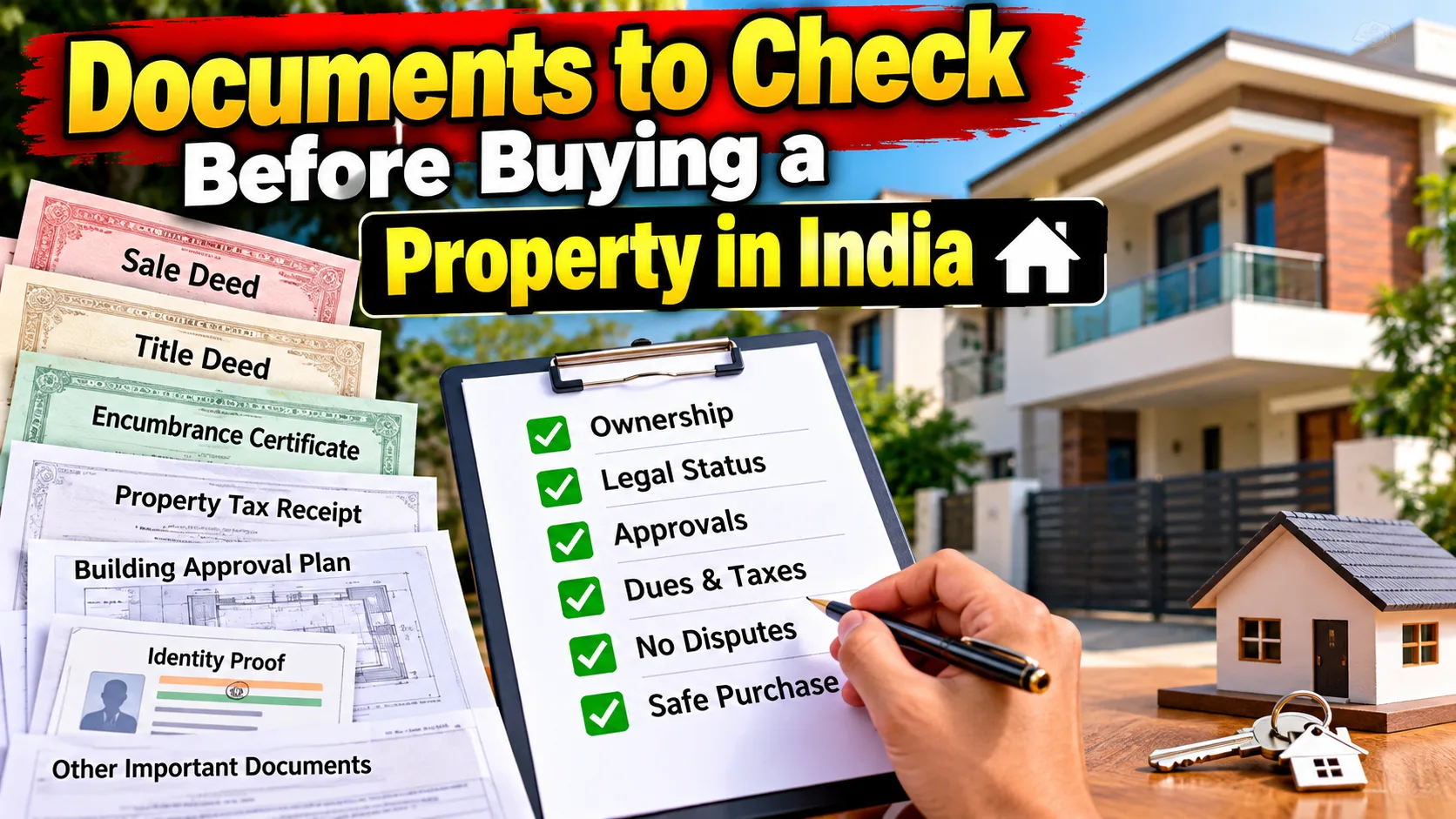
- Land title: confirm who owns the land and whether the builder has full rights. Our checklist of documents to verify covers what to ask for.
- Bank approval: a project approved by major banks has usually undergone some legal checking, but this is not a guarantee. Do your own checks.
6. Red flags
- No RERA registration, or a number that does not match the portal.
- Pressure to pay a large booking amount immediately.
- Prices far below nearby projects without explanation.
- Verbal promises that the agreement does not contain.
- Repeated extensions and unfinished earlier projects.
- Refusal to share approvals, title papers or past project details.
- Heavy discounts that depend on paying part in cash.
- Reviews and testimonials that look copied or too similar.
7. A quick scoring approach
Give each point a yes or no. If you have more than two "no" answers, think carefully before you pay.
| Check | Yes / No |
|---|---|
| Project registered on RERA, details match | |
| Past projects delivered close to the promised date | |
| No pattern of buyer complaints or refund orders | |
| No serious litigation over land title | |
| Occupancy certificate obtained in past projects | |
| Residents of delivered projects are mostly satisfied | |
| Payment plan linked to construction stage | |
| Agreement matches the brochure and promises |
This is a simple aid, not a guarantee. Use it to ask the right questions.
Questions to ask the builder directly
A good builder answers these without discomfort. Write down the replies and compare them with the agreement.
- How many projects have you completed, and when were they due versus delivered?
- Is the land fully owned by you, or under a joint development agreement? Who else has a claim?
- Is the project land mortgaged to any lender, and has the lender given written consent for the sale of flats?
- Which bank is funding the project, and how are my payments linked to construction?
- Who will form and hand over the society, and when?
- What is the maintenance deposit, and who manages the common areas after handover?
8. What to do if you find a problem
- Small gaps: ask the builder to explain in writing and confirm the answer in the agreement.
- Serious concerns: walk away, or buy a ready-to-move flat from a different builder.
- Already booked: read the cancellation and refund clause and the RERA remedies. See ready-to-move vs under-construction for how delay affects your costs.
Frequently asked questions
Is a big-brand builder always safe?
Not always. Even large builders have delayed projects. Check the specific project, its approvals and its record.
Can I check a builder's finances?
Basic company details are public, and bank approval can be a useful sign. Detailed financial health is hard to assess from outside, so focus on the delivery record and legal status.
Do RERA complaints mean the builder is bad?
A few resolved complaints are common. Repeated unresolved complaints about the same issue are a warning.
What if the builder only has one project?
A new builder is not necessarily bad, but you carry more risk. Look at the land title, approvals, funding and the team's earlier experience, and consider a smaller booking amount.
This guide is general information, not legal advice. Public records can be incomplete, so verify important points with a lawyer.