How to Negotiate the Price of a Flat or Plot in India
Practical steps to negotiate the price of a flat or plot in India, from researching comparable sales to asking for freebies, with a worked example and what never to do.
Most buyers either accept the first price or haggle without any facts. Both cost money. Negotiating a property is a normal part of the deal in India, and a few percent saved on a purchase of several lakh rupees can pay for your registration charges or interiors.
This guide explains how to prepare, what to ask for, how to behave in the meeting and what to avoid.
In short: Negotiate with data, not emotion. Know the going rate, understand the seller's situation, compare the total cost and ask for non-price benefits too. Pay only by bank transfer or cheque, and never agree to part-payment in cash.
1. Do your homework first
Your strongest tool is information. Before you speak to a seller or builder:
- Collect comparable prices. Check at least five similar flats or plots in the same locality, with the same carpet area and condition. Use listing sites, local brokers and neighbours. Ask about sold prices, not just asking prices.
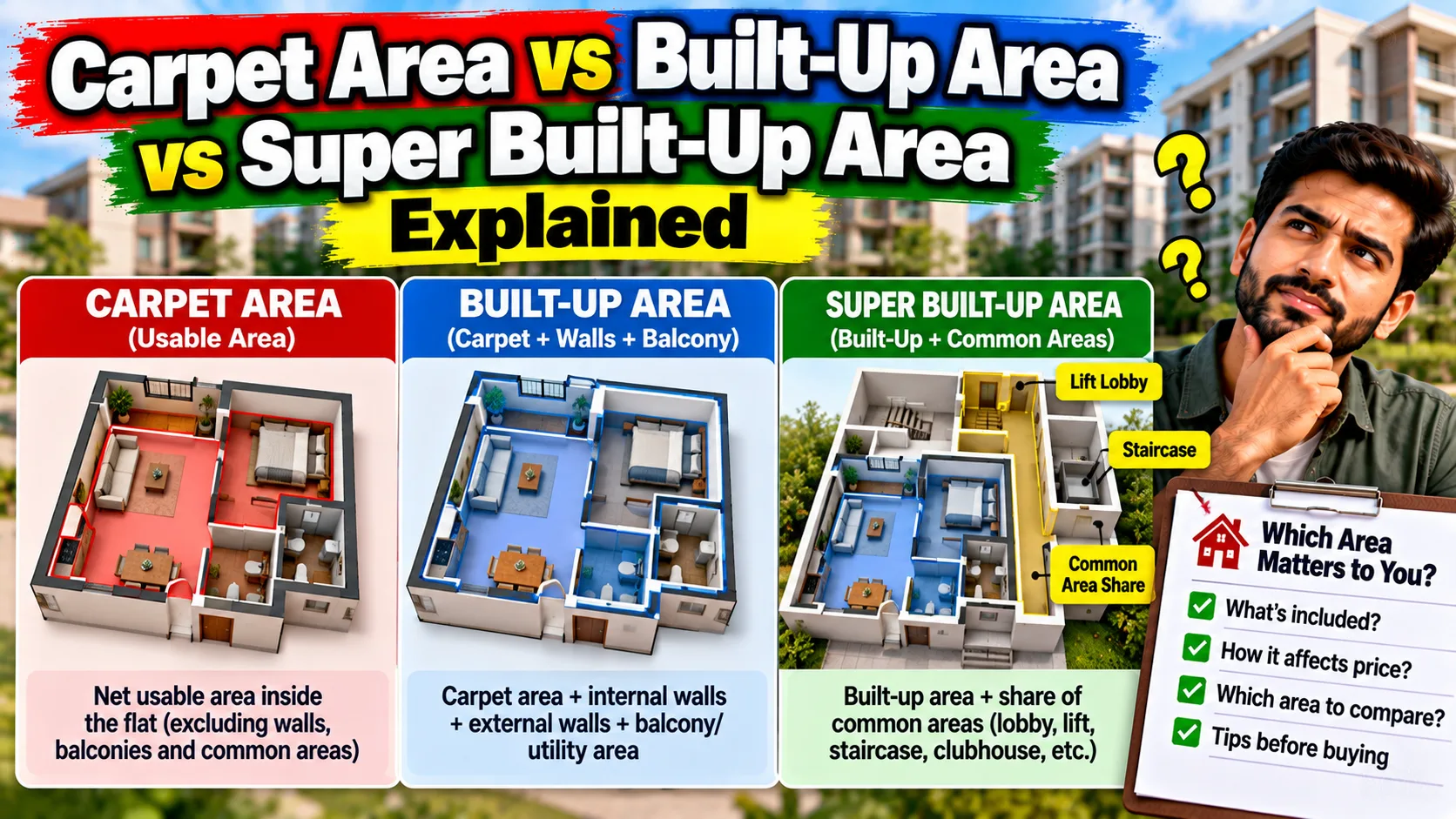
- Convert everything to carpet area. Super built-up prices hide different loadings. Our guide on carpet area vs super built-up area shows how.
- Know the circle rate or guideline value. It is the minimum value the state uses for stamp duty. Your stamp duty is based on the higher of the agreement price and this value, so a price below it does not save you tax.
- Get your finance ready. A buyer with an approved loan or ready funds is taken more seriously. See how banks decide your eligibility.
2. Understand the other side
A resale seller
Find out why they are selling. A seller who is moving cities, repaying a loan or dividing an inheritance may accept a lower price for a quick, clean deal. Ask politely about timelines. Do not use what you learn in a way that feels like pressure, because a seller who is angry will walk away.
A builder
Builders rarely cut the base price on a single unit because it affects other buyers. They are more flexible about:
- parking, club membership or maintenance deposits,
- payment plans and the timing of instalments,
- GST absorption or pay-later schemes,
- registration charges or furniture packages, and
- end-of-quarter, festive or last-few-units discounts.
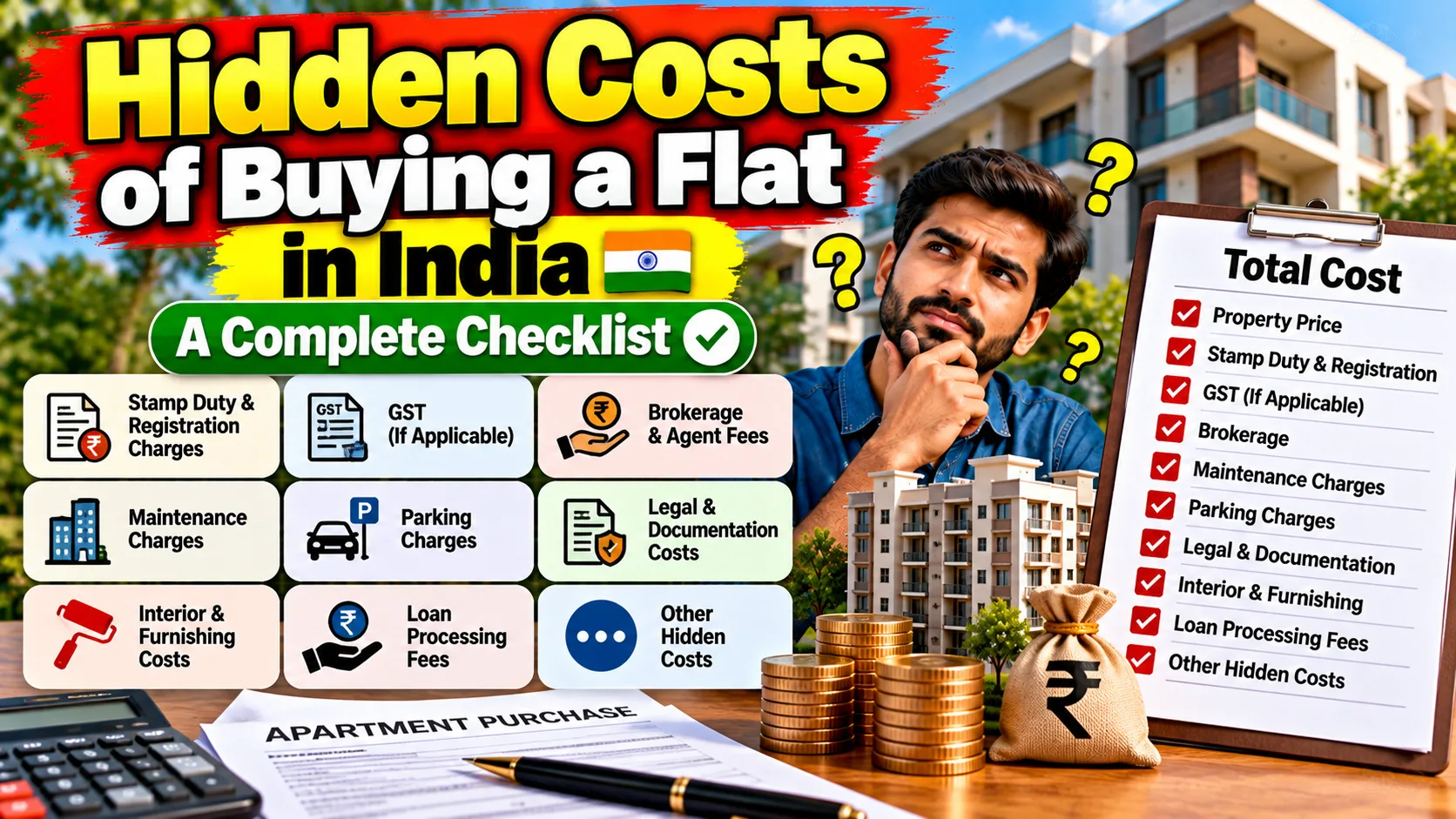
Ask for the total cost sheet in writing. Our guide to hidden costs of buying a flat lists the charges to look for.
A plot owner
Check the title, access road, zoning and the circle rate. Plots with unclear documents or disputes sell at a discount for a reason, so the discount is not a bargain unless the problem is fixed.
3. A worked example
A resale flat is listed at ₹60 lakh. You have found three similar flats in the same building that sold for ₹56 to ₹58 lakh in the past six months. The flat needs about ₹1.5 lakh of repair work. You offer ₹56 lakh, and settle at ₹58.2 lakh.
| Item | Amount |
|---|---|
| Asking price | ₹60,00,000 |
| Agreed price | ₹58,20,000 |
| Saving | ₹1,80,000 (3% of the asking price) |
Your reasons were facts that the seller could check: recent sales and visible repair needs. That is much more effective than saying the price "feels high". The saving may look small as a percentage, but it is as large as many buyers' registration and brokerage charges.
Because stamp duty is based on the agreement value, a lower agreed price also reduces the duty slightly, provided the price is not below the circle rate.
4. How to run the conversation
- Start with a reasonable offer. An insulting offer ends the talk. A reasoned offer, a little below your target, leaves room to move up.
- Give reasons. "Three flats in this building sold at ₹57 lakh" is stronger than "can you reduce it".
- Be silent after your offer. Let the other side respond. Do not fill the gap by lowering your own offer.
- Trade, don't just ask. Offer something in return: a quick closing, a larger token, a clean timeline.
- Bundle the items. If the price will not move, ask for the fixtures, a repair, the parking or the society transfer fee.
- Be ready to walk away. If you are not ready to leave, you have no leverage.
- Get the final price in writing. Put the agreed price, the items included and the payment schedule in the agreement for sale.
5. Things you must not do
Never pay part in cash
Some sellers suggest "so much in cash, so much by cheque" to show a lower price on paper. Do not agree. The reasons are serious:
- Income-tax rules restrict receiving large sums of cash for property, and penalties can equal the amount received. The rules and section numbers have been renumbered recently, so check the current position with a tax professional.
- A cash payment leaves no proof. If a dispute arises, you cannot show that you paid.
- Underreporting the price to save stamp duty is an offence, and the tax authorities can reassess the value later.
- Banks lend on the registered value, so a lower paper price also means a smaller loan.
Pay through banking channels only and keep every receipt.
Do not pay a large token without papers
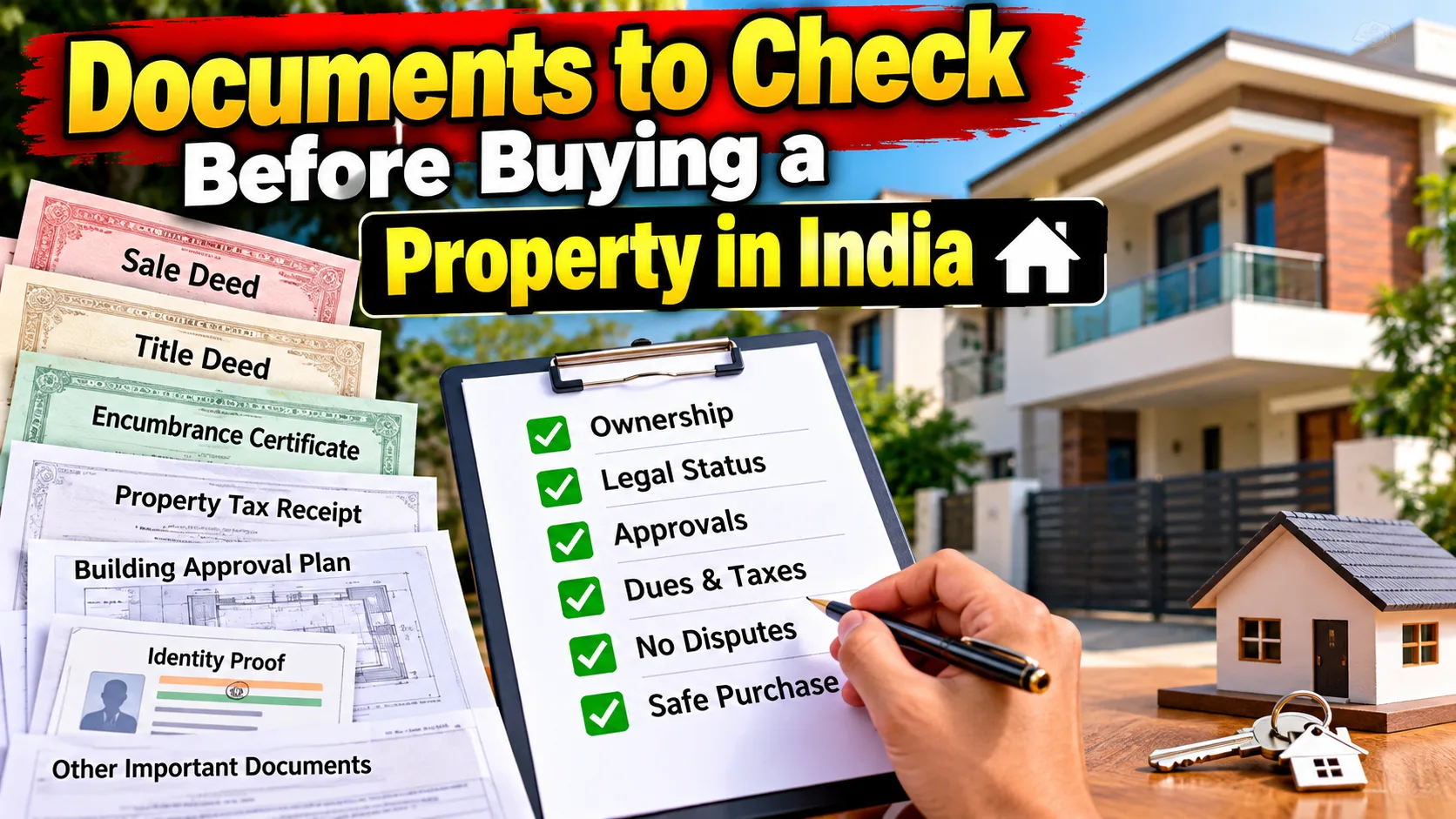
Check the title documents first. Our checklist of documents to verify before buying covers them. If you pay a token, record it in a written receipt that states the property, the price and the conditions for refund.
Do not rush because of "other buyers"
"Someone else will take it tomorrow" is the oldest sales line. If the price is right, a few days of due diligence will not lose the flat. If a deal cannot wait for a document check, walk away.
6. Negotiating with a builder in a RERA project
In a registered project, you can look up the project on the state RERA website, including the carpet area, the schedule and the promised amenities. Use it to verify that the price quoted matches the area and that the agreement follows the approved plan. See how to check a project on RERA.
Compare the quote with other registered projects nearby, and ask the builder to explain any difference. A builder who is confident in the product will not mind a buyer who has done the homework.
7. After the deal: protect what you negotiated
- Include every promised item in the agreement for sale, such as the parking slot, fixtures or repairs.
- Ask the lawyer to read the payment schedule and the cancellation clause.
- Pay only against receipts and keep proof of each transfer.
- For a loan, confirm the sanction before you pay the main amount. See how the home loan process works.
Frequently asked questions
How much discount can I realistically get?
It depends on the market, the seller's urgency and whether the price was inflated. Resale deals usually allow more room than builder sales. Use comparable sales as your guide rather than a fixed percentage.
Should I negotiate through a broker?
You can, but a broker is paid by the deal and may push you to close. Verify prices yourself and do not let the broker handle money.
Is it fine to ask for a lower price because of repairs?
Yes. Get a quote from a contractor and show it. Repairs you can prove are a fair basis for a lower price.
Can I negotiate after signing the agreement?
Rarely. Settle the price and conditions before you sign, because the agreement for sale is what binds both sides.
This guide is general information, not legal or financial advice. Tax rules and state stamp duty rules change, so confirm them with a professional before you pay.