Resale Flat vs New Flat: Which Is the Better Buy in India?
Compare a resale flat and a new builder flat on cost, GST, legal risk, loan, possession and long-term value, with a checklist for each so you can decide with confidence.
Should you buy a flat that someone already lives in, or one that a builder is selling for the first time? There is no universal answer. A resale flat can be cheaper, ready to move into and located in an established neighbourhood. A new flat offers modern design, fresh paperwork and the protection of RERA, but often at a higher price and with a wait.
This guide compares the two on the things that actually change your bill and your risk, so you can pick the one that fits your situation.
In short: Resale is usually better if you want to move in soon, prefer an established area and are ready to check old paperwork carefully. A new flat suits you if you want modern amenities, a clean title history and the option to pay in stages. Compare the total cost, not the headline price.
Side-by-side comparison
| Resale flat | New flat from a builder | |
|---|---|---|
| Possession | Usually immediate or within weeks | Immediate if ready, or after months or years if under construction |
| Price | Often lower per sq ft in established areas | Often higher, with a premium for new amenities |
| GST | None | 5% on most under-construction flats, 1% if affordable, none if the flat already has a completion or occupancy certificate |
| Stamp duty and registration | Yes | Yes |
| Title and paperwork | Longer chain of owners, more to verify | Cleaner, but you still have to check land title and approvals |
| RERA protection | Generally not applicable to a finished building | Applies to registered, under-construction projects |
| Home loan | Banks check the building's age and condition | Easier approval if the project is bank-approved |
| Negotiation room | More | Less, apart from offers and payment plans |
| Maintenance and repairs | May need renovation soon | Low in the early years, with structural defect liability of five years under RERA |
1. Cost: look beyond the price per square foot
A resale flat looks cheaper because the listing price is often lower. To compare fairly, add up the actual outlay for each:
- Resale: price, stamp duty and registration, brokerage, society transfer fee, plus any renovation cost.
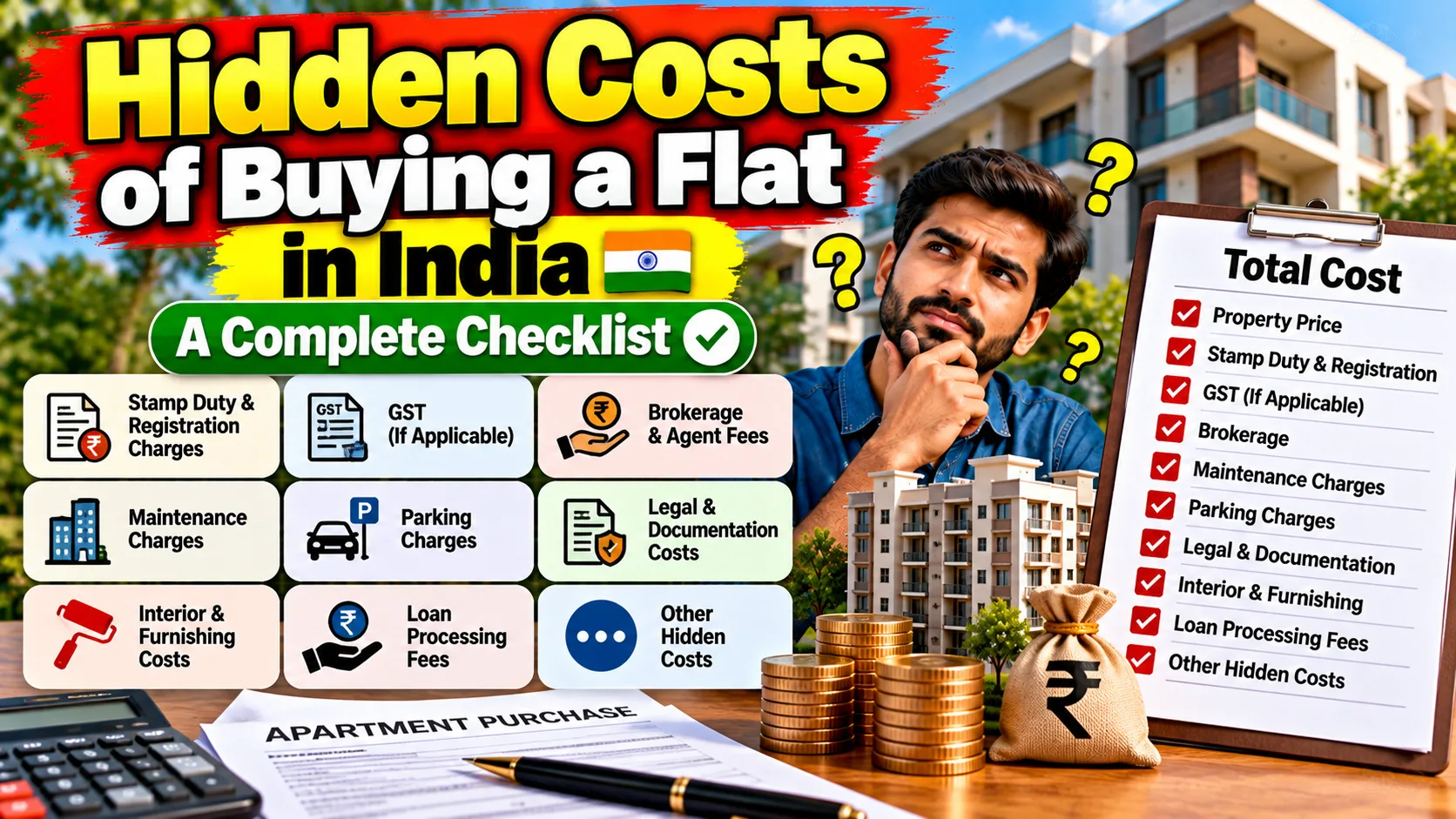
- New: price, GST if applicable, stamp duty and registration, parking and club charges, advance maintenance and interiors. See our guide to the hidden costs of buying a flat.
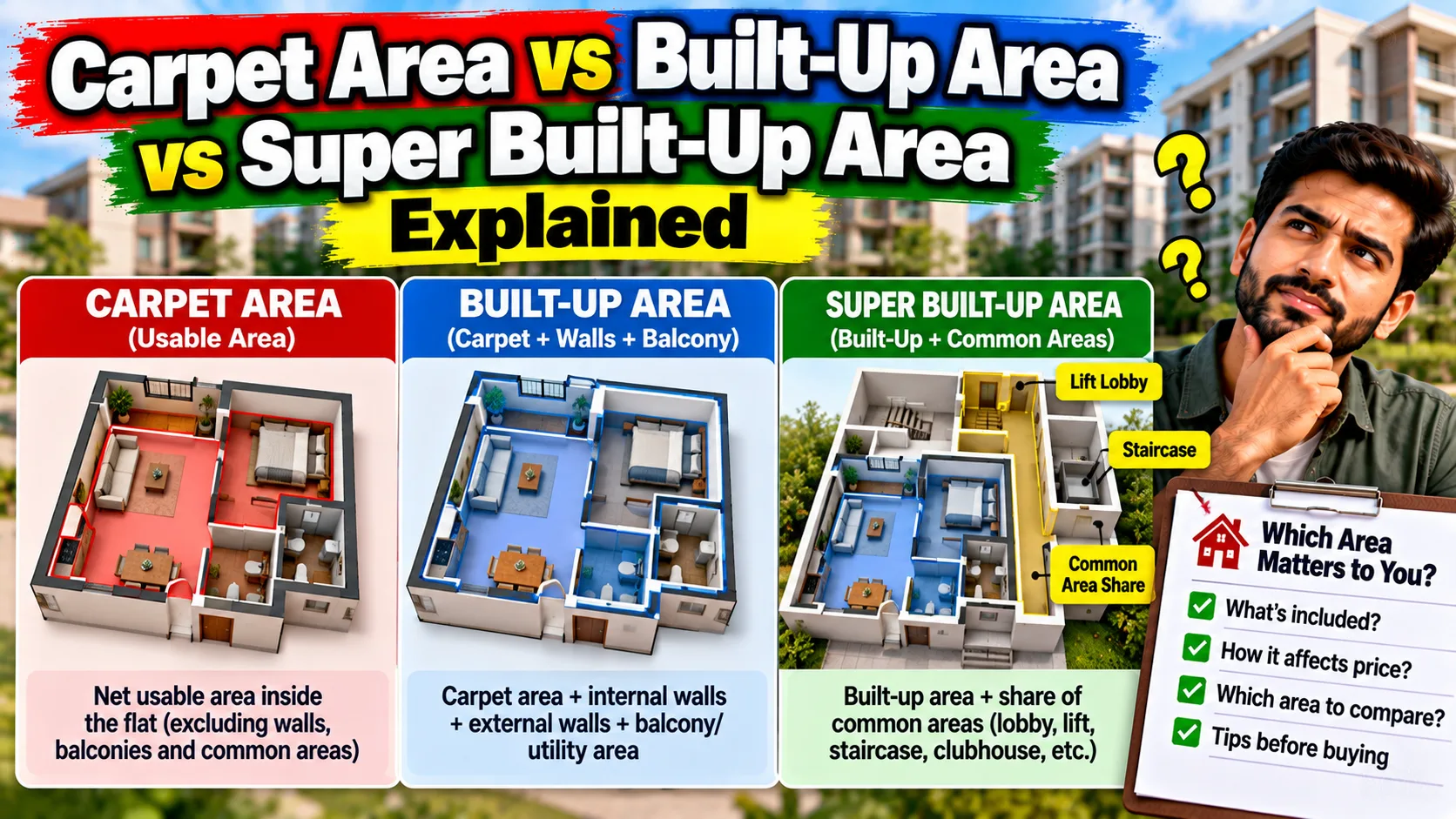
Also compare on carpet area, since resale flats in older buildings are often measured on built-up area, and new projects often quote super built-up area. Our explainer on carpet, built-up and super built-up area shows how to convert.
2. Legal risk and paperwork
Resale flat. You buy from an individual owner, who may have bought from someone else, and so on. That means a longer chain of documents to check: sale deeds, mutation, society records, a no-dues certificate and the seller's loan status if any. Skipping any of this is how buyers end up in disputes. Use the checklist in our guide to documents to verify before buying.
Pay special attention to:
- whether the building has an occupancy certificate and follows its sanctioned plan,
- whether the seller's loan will be closed, with the original papers released,
- whether all co-owners and legal heirs are signing, and
- whether society dues are cleared.
New flat. The paperwork is fresher, but you still need to verify the land title, approvals and the builder's reputation. For under-construction projects, check that the project is registered with RERA. See how to check a project.
3. The tax angle
- GST applies only to the new, under-construction flat. For a flat that already has a completion or occupancy certificate, there is generally no GST. Resale flats have none.
- Stamp duty and registration apply to both and are charged by your state.
- Home loan tax benefits work the same way for both, though pre-completion interest only arises with under-construction flats. See our guide to home loan tax benefits.
4. Home loan differences
- Resale: the bank will value the flat and review the age and structural condition of the building. Some lenders limit the loan tenure or the amount for older buildings. Because you pay the seller in one or two instalments, the loan is usually disbursed at once.
- New: many builders have tie-ups with banks that have already checked the project, which speeds up approval. The loan is released in stages as construction progresses, and you pay only interest (pre-EMI) until the last payment goes out. Our EMI guide explains pre-EMI.
Check your own eligibility first. See how banks decide your eligibility.
5. Quality, age and the future of the building
- Old buildings may need repairs, plumbing and wiring work, and a structural audit is wise for buildings over about 25–30 years. On the plus side, they are often in central, well-connected localities with mature infrastructure.
- Redevelopment can be a benefit or a headache. Ask the society about any redevelopment plans and what existing owners would receive.
- New buildings have modern layouts, lifts, parking and amenities. But a promised clubhouse and garden are not the same as a built one, so inspect the sample flat, the actual tower and similar finished projects by the same builder.
- Maintenance charges in well-run older societies can be lower than in amenity-heavy new complexes.
6. Negotiation
Resale offers more room. A seller who needs to move or clear a loan may accept a lower price. Check recent sale prices of similar flats in the same building or nearby, and use them in your negotiation. New projects have less scope for price cuts, but builders often give benefits such as free parking, waived charges or flexible payment plans. Get every promise in writing. Our guide to negotiating a flat price gives practical steps.
Checklist: before you pick resale
- Verify title documents and the chain of ownership.
- Confirm the occupancy certificate and sanctioned plan.
- Ask for society NOC, share certificate and a no-dues letter.
- Get a structural check if the building is old.
- Visit at different times to check water, noise and parking.
- Speak with neighbours and the society office.
- Ensure the seller's loan, if any, is closed through the sale.
Checklist: before you pick a new flat
- Verify RERA registration and compare the agreement with the registered plan.
- Check the builder's past projects. Our guide on checking a builder's track record shows how.
- Compare the total cost, including GST and extras.
- Read the payment schedule and the delay clauses carefully.
- Confirm the carpet area and what the price includes.
- Visit the site and measure progress, not just the model flat.
Which one should you choose?
- Choose resale if you need to move in soon, want an established location, can verify old documents carefully and have room to negotiate.
- Choose new if you want modern design, a cleaner title history, flexible payment, and can wait for possession or choose a ready-to-move unit.
- Think about a ready-to-move new flat if you want the best of both. It avoids GST (if it has a certificate) and construction delay, with a fresh title.
Frequently asked questions
Is a resale flat cheaper than a new flat?
Often, but not always. Compare the total outlay including taxes, renovation and extras, on the same carpet area.
Does RERA protect me if I buy a resale flat?
Usually not, because RERA mainly covers projects that are registered and under development. Resale of a finished flat is checked through title documents and approvals.
Can I get a home loan for a very old building?
Banks may lend, but they may reduce the tenure or loan amount, and some refuse very old or unsafe buildings. Ask the bank about its policy before you pay a token amount.
Which has better resale value?
Location, building condition, society management and demand matter more than whether the flat was new or resale when you bought it.
This guide is general information, not legal or financial advice. Rules vary by state and change over time. Confirm details with a lawyer, your lender and the local authority before you buy.