First-Time Home Buyer Checklist for India: 12 Steps From Budget to Keys
A step-by-step checklist for first-time home buyers in India, covering budget, eligibility, search, legal checks, loan, registration and possession, with the mistakes to avoid.

Buying your first home is the biggest financial decision most people make, and the process has many moving parts: budget, loan, legal checks, registration and possession. Missing one step can cost lakhs or years of trouble.
This checklist takes you through the whole journey in order, with links to detailed guides for each step.
In short: Decide your budget first, check your loan eligibility, shortlist properties, verify the legal papers and the builder, negotiate, then sign, register and take possession in that order. Do not pay big amounts before the documents are checked.
Step 1: Decide your real budget
Do not start with the price you like. Start with what you can sustain.
- Down payment: banks usually lend part of the price, and you pay the rest from your own funds.
- EMI limit: many advisers suggest keeping total EMIs within about 40% of monthly income, though this is a rule of thumb and your own commitments matter.
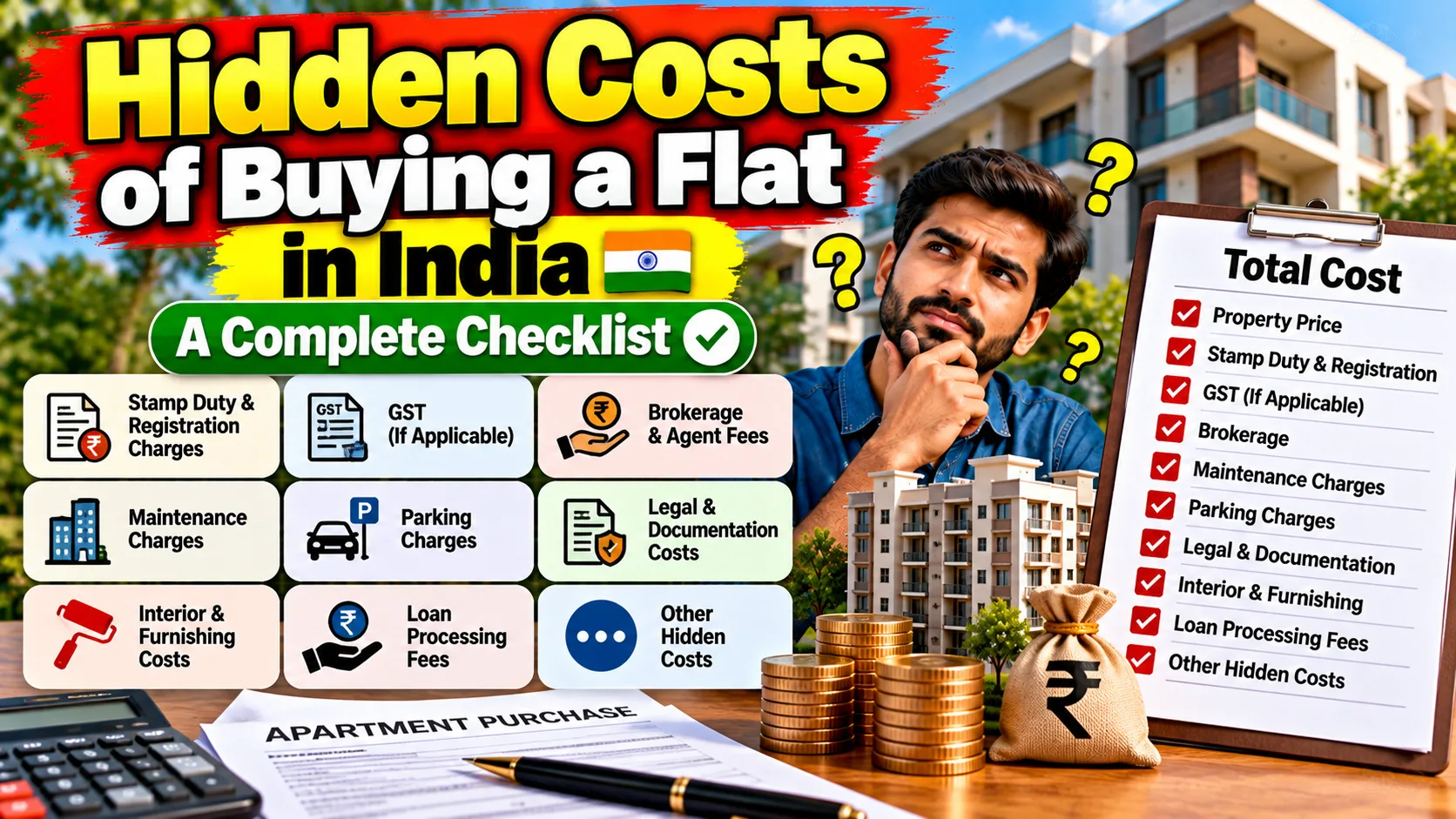
- Extra costs: stamp duty, registration, GST on under-construction flats, brokerage, interiors, moving. Our guide to hidden costs of buying a flat lists them.
- Emergency fund: keep several months of expenses aside, so that one bad month does not turn into a missed EMI.
Step 2: Check your eligibility and credit score
Before you search, learn how much a bank will lend. Read how banks decide your eligibility and check your credit report. If your score is weak, fix it first. See how to improve your CIBIL score.
Ask for an in-principle approval or an eligibility estimate. It is not final, but it tells you the range to shop in.
Step 3: Understand the loan basics
Know what you are signing up for.
- How EMI is calculated.
- Fixed vs floating rate.
- Tax benefits on the loan.
- If your income is modest, check whether you qualify for the PMAY-Urban 2.0 interest subsidy.
Step 4: Choose what kind of property you want
Decide on these basics before you visit properties:
- Location: commute, schools, hospitals, water supply, flooding history and future infrastructure.
- Type: resale or new flat, and ready-to-move or under construction.
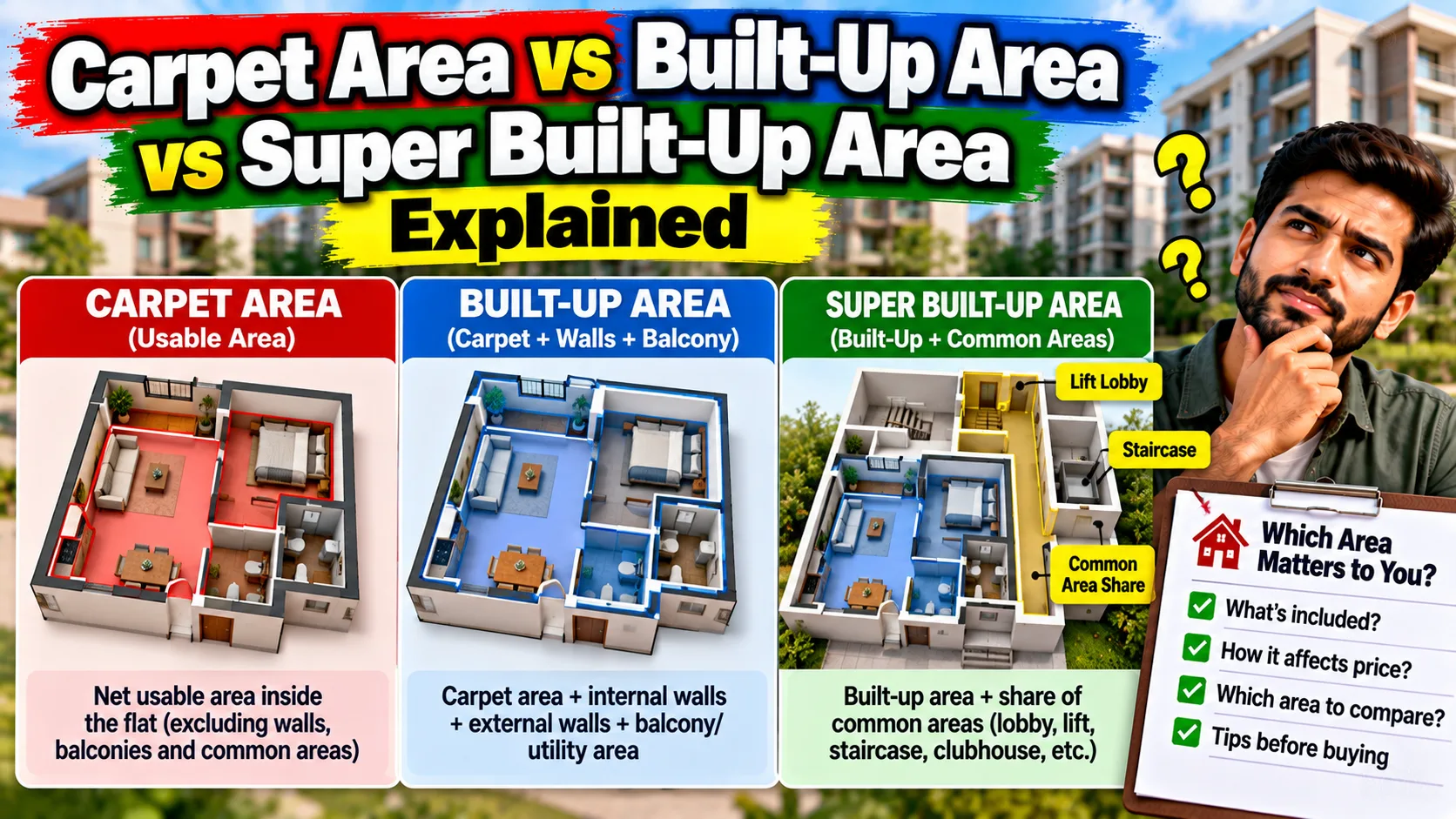
- Size: compare on carpet area. See carpet vs super built-up area.
- Must-haves vs nice-to-haves: lift, parking, floor, direction, power backup.
Step 5: Shortlist and visit
Visit each shortlisted property at least twice, once on a weekday and once at a different time of day. Check water pressure, noise, parking, security, the condition of common areas and the quality of construction. Talk to residents. For a new project, visit the actual site, not just the sales office.
Step 6: Verify the builder or seller
For a builder, check the track record of past projects, litigation and delivery history. Our guide on how to check a builder's track record shows how. For a resale flat, confirm who owns the flat and whether all owners will sign.
Step 7: Verify the legal documents
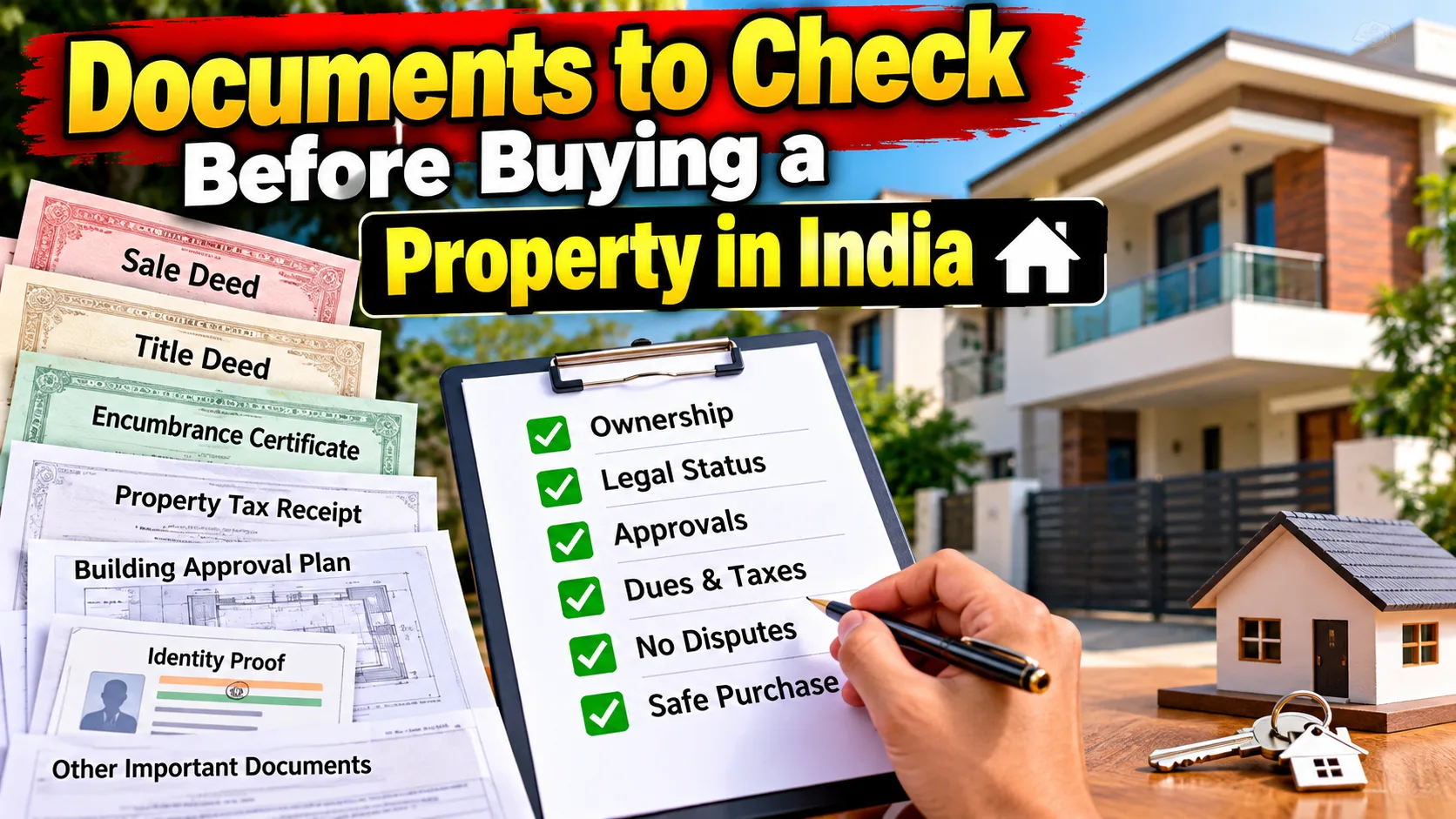
This is the step that protects you from the worst outcomes. Check the title, approvals, encumbrances and society records. Use the full list in documents to check before buying property. For a new project, verify the registration on the state RERA website. See how to check a RERA project.
If you are buying land in Bihar, also check the land records. See how to check Bihar land records online.
Hire a property lawyer for a title search if the property is a resale, a plot, or if anything looks unclear. The fee is small compared with the price.
Step 8: Negotiate the price and terms
Use comparable prices and the total cost sheet. Ask for non-price benefits. Never agree to cash payments. See how to negotiate the price.
Step 9: Apply for the home loan
Compare at least three lenders on rate, processing fee, prepayment terms and service. Prepare your documents and learn the stages. See home loan documents and the approval process. Read the sanction letter and the key facts statement carefully before you accept.
Step 10: Sign the agreement for sale
For a new flat, the builder and you sign an agreement for sale. For a resale, it is an agreement to sell. Have the lawyer read it before you sign. Check:
- the price, area and what is included,
- the payment schedule and the possession date,
- the penalty for delay by either side,
- the cancellation and refund terms, and
- the list of fittings and amenities.
Step 11: Registration and stamp duty
The sale is complete in law only when the sale deed is registered. You pay stamp duty and registration fees as set by your state, and both parties visit the sub-registrar's office or use the online process where available. Keep certified copies of everything.
Step 12: Possession and after
At possession, inspect the flat against the agreement. Check the carpet area, fittings, electrical and plumbing, and note defects in writing. Collect the keys only after the occupancy certificate has been shared (for a new project), the society details and the original documents are in order.
After possession:
- Get the property mutated in your name where applicable.
- Transfer utilities such as electricity and water.
- Keep every document in one safe place, with digital copies.
- Claim your tax benefits correctly.
Common mistakes first-time buyers make
- Paying a large token before verifying the documents.
- Comparing prices on super built-up area instead of carpet area.
- Stretching the EMI to the maximum and leaving no buffer.
- Trusting verbal promises that are not in the agreement.
- Ignoring the builder's past record.
- Forgetting extra costs such as GST, stamp duty and maintenance deposits.
- Not reading the loan sanction letter fully.
One-page checklist
- Budget and emergency fund decided
- Credit report checked
- Eligibility estimate in hand
- Property type and location chosen
- Shortlisted properties visited twice
- Builder or seller verified
- Legal documents and RERA checked
- Price and terms negotiated
- Loan sanctioned and understood
- Agreement read by a lawyer
- Stamp duty paid and sale deed registered
- Possession inspected and documents filed
Frequently asked questions
How much down payment do I need?
Banks typically finance a large part of the property value, and you pay the rest. The exact limit depends on the property value, your profile and the lender's rules, so ask the bank.
How long does the whole process take?
For a ready flat, a few weeks to a few months. For an under-construction flat, the buying steps are quick, but possession takes as long as the project does.
Should I buy now or wait?
That depends on your income stability, savings, how long you will stay and what you pay in rent now. A property bought without stable income or a buffer can be a burden regardless of market timing.
Do I need a lawyer?
For any resale flat, plot, or an unclear case, yes. For a registered project from a known builder, a lawyer still helps read the agreement.
This guide is general information, not legal or financial advice. Rules differ by state and change over time.